








 Wail Saidani
Founder of DevDream
Wail Saidani
Founder of DevDream
 Claude
 ChatGPT
 Perplexity
 Le Chat
 Grok
Grok
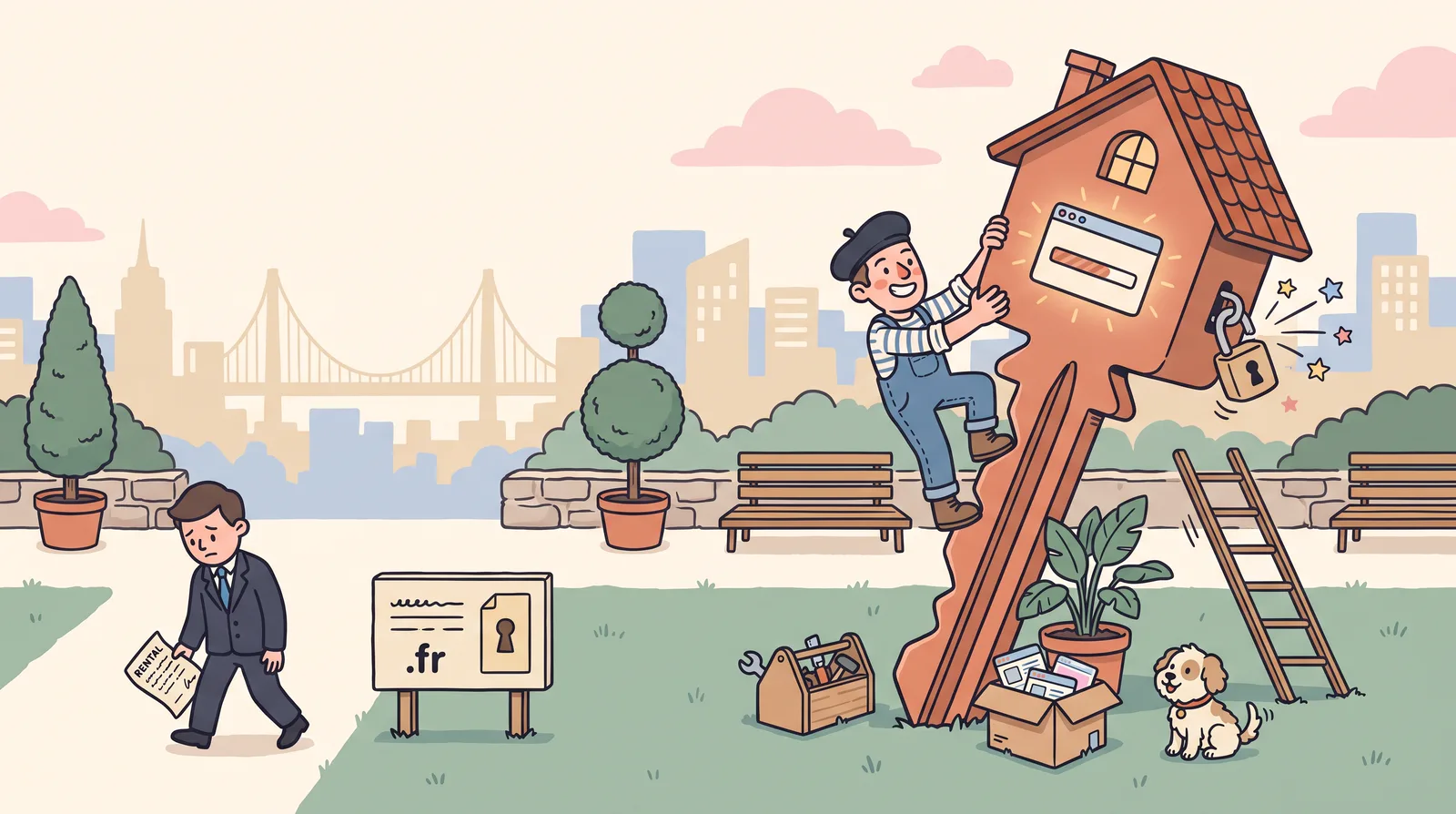
To check website ownership, start with four things: the domain name, hosting, code and content. They should be held in your name, with accounts and access under your control. If an agency or platform controls one of those essentials, your ability to keep the site can depend on continued payment. Three models share the market today: the subscription platform, the site rented by an agency, and the site purchased once and for all. Only one of the three makes you an owner in the full sense.
This article explains those models, the risks of depending on a provider and how to check your situation in under an hour. The legal references describe the French context of the original guide.
What does it mean to own your website?
Being the owner of your website requires that four elements be in your name, independently of the service provider who created them: the domain name (the address, e.g. devdream.fr), thehosting (the server that runs the site), the source code (the files, the CMS, the database) and the content (copy, photos, customer reviews and data). If one is missing, you are a tenant, not an owner, even if you "purchased" your site.
Concretely, this is verified point by point:
- Domain name : the holder ("registrant") registered with the registrar is you or your company, not the agency.
- Hosting : the hosting account is in your name with your own login, rather than only a subaccount controlled by the provider.
- Source code : you can obtain all files and the database without negotiating their release.
- Content : your copy, images and customer data belong to you and can be exported or supplied on request.
The legal point is often overlooked. In France, paying for a website does not automatically transfer all copyright.
"Authorship belongs, unless proven otherwise, to the person or persons under whose name the work is disclosed," explains Aurore Bonavia, an intellectual-property lawyer at the Val-d'Oise bar in France (Village de la Justice, April 18, 2022; translated from French).
In the French context discussed here, the contract needs a written copyright-assignment clause. Payment alone does not transfer the creator's rights.
Owning the domain name alone is not enough. According to theAfnic study from December 2023, 90% of French small and midsize businesses with a website had their own domain, but only 51% used email linked to that domain. Domain ownership does not, by itself, establish independence from other providers.
What are the 3 website models on the market?
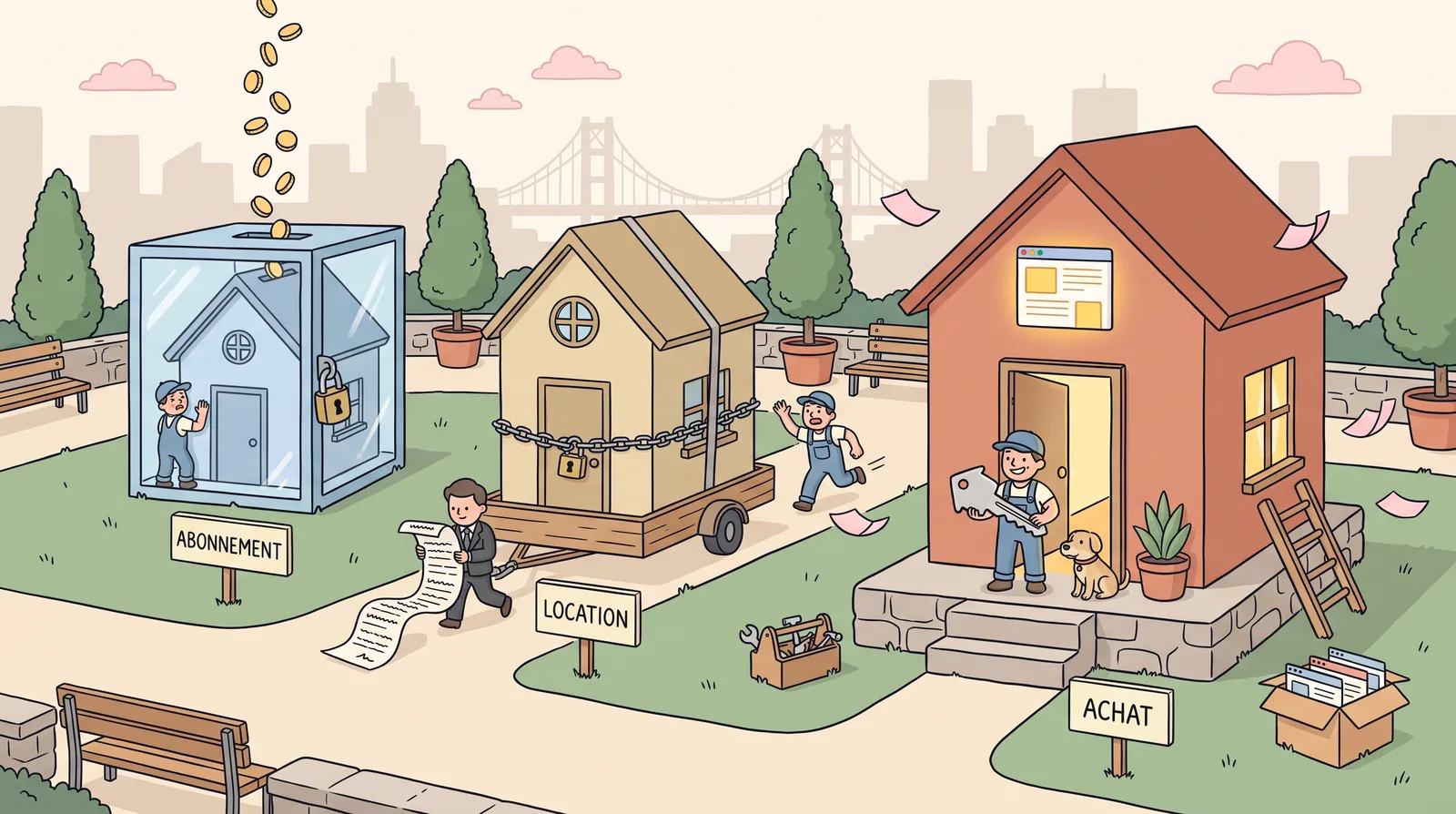
Three models coexist, with very different consequences on who owns what: the subscription platform (Wix type), the rental website billed by an agency, and the site purchased once. Only the third actually transfers ownership to the customer upon delivery.
| Model | Who owns what | Cost over time | If you leave |
|---|---|---|---|
| Subscription platform | The platform hosts and locks the code; the domain is sometimes in your name | Ongoing monthly payments: the Wix plans cited in the original guide ranged from EUR 16.80 to EUR 178.80/month, depending on the annual commitment (source, updated May 2026) | The site can disappear; sometimes only raw content can be exported, rather than the full code |
| Site rented by an agency | The agency keeps the code, sometimes the hosting, on a contract billed in monthly installments | Payments over three to five years, sometimes through a financing company | Site suspended in the event of non-payment or departure; the code is never transmitted |
| Site purchased (DevDream model) | Domain, hosting, code and content in the name of the client upon delivery | One payment from EUR 900, plus independent hosting costing a few euros per month | Nothing changes; you leave with everything, including to another service provider |
Agency rental is a real model in France. The DGCCRF documents financial lease agreements sold to businesses contacted about a website, often in a single meeting, then transferred to an outside financing company. The French consumer-protection source describes situations where dissatisfaction does not release the business from its commitment.
What are the risks of not owning your website?
Four risks can arise when a provider controls the site : rising prices, loss of the site when you leave, disrupted search visibility during migration and content locked in an account you do not control.
- The rising price. On a subscription platform, changing plans along the way happens quickly as soon as the site grows (storage, number of employees, functionalities). Paying monthly rather than annually also costs 20 to 30% more on Wix offers (source).
- The site that disappears if you leave. With a rented website, the code may never be transferred. Stopping payments can mean losing the site, with limited negotiating room after a contract is transferred to a financing company.
- Lost search visibility. A forced domain or platform migration can disrupt accumulated search visibility. In July 2025, Search Engine Journal documented the case of an e-commerce site that lost 30% of its organic traffic after a platform migration, despite redirections in place.
- Locked content. Photos, product sheets, customer reviews collected for years: without export guaranteed by contract, they remain blocked in the service provider's interface at the slightest disagreement.
Renting and owning can produce very different outcomes:
| Criterion | Rented site (subscription or agency) | Owned website (purchased once) |
|---|---|---|
| Domain name | Sometimes in the name of the agency or platform | Registered in your name upon delivery |
| Source code | Locked, never transmitted | Fully recoverable, without conditions or negotiation |
| Cost over time | Lifetime subscription or monthly payments over 3 to 5 years | One payment, plus hosting costing a few euros per month |
| If you leave | Site suspended or disappeared; raw export of content at best | Nothing changes, you leave with everything |
| SEO | At risk during a forced domain or platform migration | Retained: the domain and the site remain yours |
| Content (texts, photos, reviews) | Blocked in the service provider interface at the slightest disagreement | Exportable, they belong to you |
Who owns your website today?
To find out who owns your site, four checks are enough: the domain name holder, the hosting holder, the real possibility of exporting the site, and the existence of a transfer of rights clause in your contract. You can check all four in under an hour.
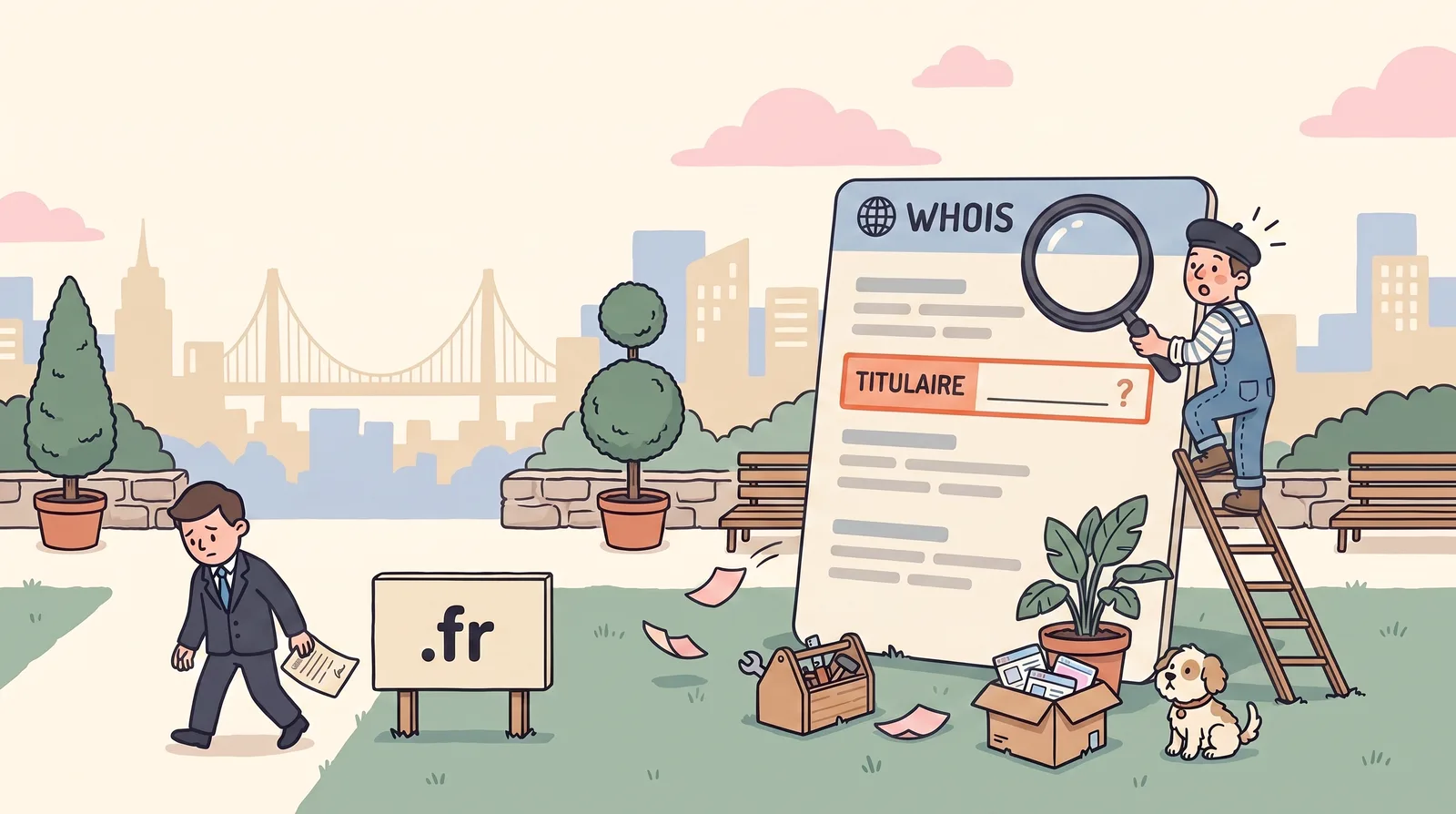
- Who owns the domain name? Enter your domain into a WHOIS service such as whois.com and inspect the "Registrant" or "Holder" field. If the agency is listed instead of your business, ask for clarification. Privacy settings can hide this information, so also check the registrar account.
- Who controls the hosting? Check whose name is on the hosting bill and who has the login. Is it your account, or a reseller account controlled by the provider?
- Can you export your site? Ask the provider for the complete export: files and database. Check the contract for what must be delivered. A refusal or unclear answer deserves attention.
- Does the contract provide for an explicit transfer of rights? Review the contract's intellectual-property or copyright-assignment clause. In the French context discussed here, payment alone does not transfer all rights.
How does DevDream guarantee your ownership from day one?
At DevDream, the domain, hosting, code and content are held in the client's name on delivery, rather than mine. This is my commitment, detailed on the page website creation offer for contractors, and set out in my terms of sale, rather than left as a verbal sales promise.
With a website from EUR 900, paid once without a required platform subscription, the cumulative cost differs from renting a platform or agency website. I explain the numbers in contractor website costs.
A contractor leaving a platform or rental provider may have no complete export or rights assignment and need to rebuild: design, copy and sometimes weeks of work before regaining control. DevDream's ownership-on-delivery approach is designed to avoid that future dependency.
Frequently asked questions
Key takeaways
| Question | Key point | Mistake to avoid |
|---|---|---|
| What is being an owner? | Domain, hosting, source code and content in your name | Believing that having "purchased" your site is enough, without written transfer of rights |
| The 3 models on the market | Purchasing with an explicit transfer provides ownership on delivery | Lifetime subscription and rental billed in monthly installments over 3 to 5 years |
| Rental risks | Rising prices, disappearing site, lost SEO, blocked content | A rental commitment transferred to a financing company |
| Check your situation | Domain account, hosting bill, export and assignment clause | A service provider who refuses export or remains unclear about ownership |
| The DevDream guarantee | Client ownership on delivery, stated in the terms of sale | Ownership confirmed in writing |
A site that truly belongs to you is built from day one, not by negotiating its release two years later. Let's talk about your project.
Founder of DevDream, a web and AI workshop for contractors and small businesses in Villeneuve-la-Garenne, near Paris, France (92). I have built websites that bring in customers since 2018 and automate small-business paperwork. Rated 5.0/5 on Google (16 reviews).
Follow me on LinkedIn →You may also like
Browse the blog


A question about your project?
Free 30-minute introductory call. I reply within 24 business hours.
Discuss my project →